Maria Bilașevschi
How free is the color? How much is reasoning, perception, feeling, symbol or chance? Relying on the power to perceive, associate, re-evoke or enter into a synesthetic relationship with the work, Mando’s art is dedicated to the purity and intrinsic valences of pigments and explores, on the one hand, the instinctive act, spontaneous of the original experiment with the materiality of color, and on the other hand, it questions the way of looking, in fact the conflict between what we see and what we think we know.
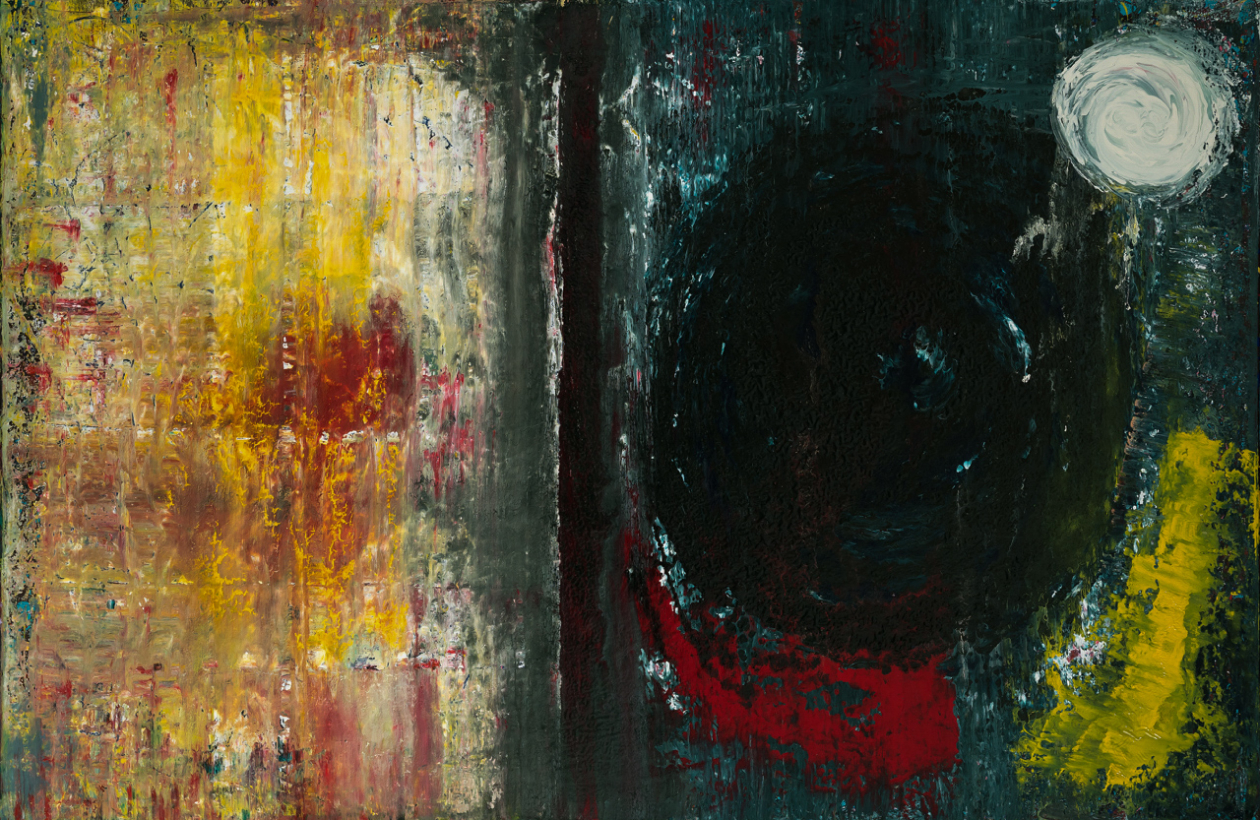
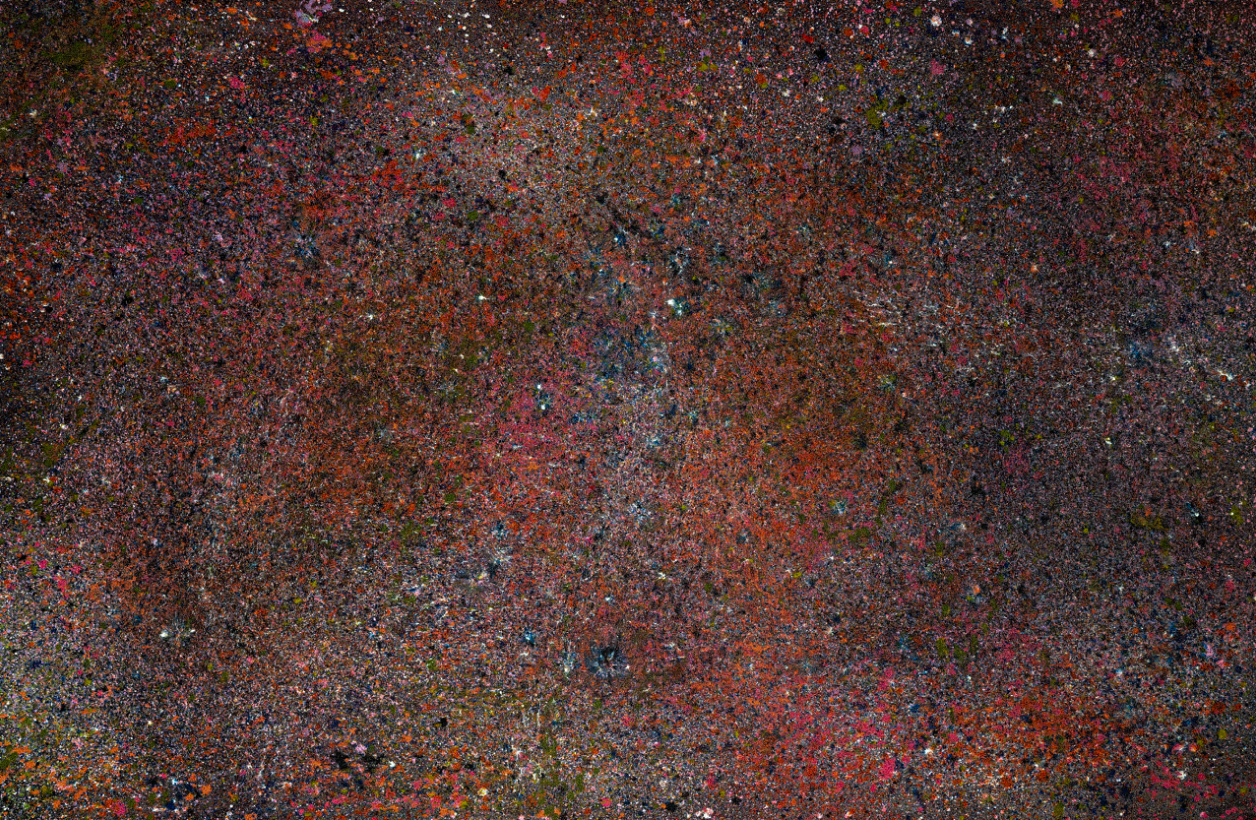
The serialism of size and monochromatic choices is broken by the different placements of pigment in successive layers of paint, abandoning the purely visual, aesthetic aspect for the physical, organic one. The random placement of color spots under the paint, dilation according to its own chemical principles, make the perception of the work expand outside the two-dimensional frame, the optic invoking the tactile, the representation renouncing the rational grid of explanation that requires figurative anchors for the subjective identification of a type of real.
The sheer existence of color by itself cancels out any pre-set narrative, the sheer pleasure of perception dominating intellect, knowledge, discursiveness. The way in which the pigments gradually infiltrate, invading the canvas, does not belong to alchemy, but to the variations in intensity of the intention, from the black that contains all the images in itself, to the circular dissolution in white of a vibration.
Even though it might seem that for Mando the almost mystical pleasure in color itself, property and effect, is the finality, that of the transformation of the ineffable into the visible, the successive choices and details of layering, the possibilities of seeing another image with each glance, and not always looking for a meaning or message, is a plea for experiencing art as art.